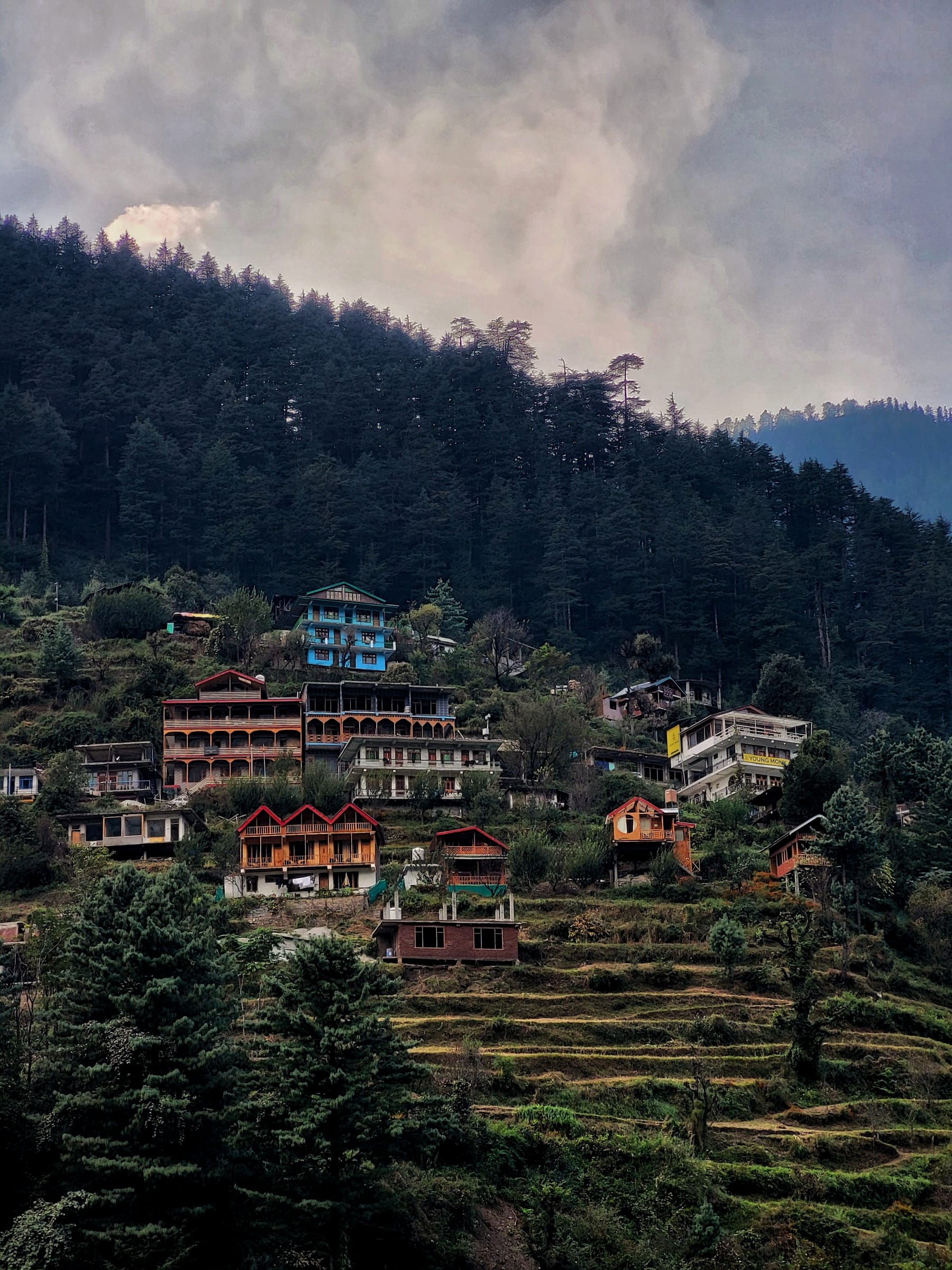
Jibhi is small: one road, a stream, a cluster of wooden houses and a forest that comes right down to the rooftops. That is the point of it. The best things to do in Jibhi are mostly simple, and most are within 15 km of the village, so you can see the essentials in two unhurried days. Here are seven, with a two-day plan to fit them all in.
At a glance
- Day one, in the valley: the waterfall, the cafes, and the walk to Chehni Kothi.
- Day two, up high: Jalori Pass, then Serolsar Lake or Raghupur Fort, with lunch in Shoja on the way down.
- Getting around: on foot in the village; a rented scooty or bike, or a taxi, for the pass.
1. Walk to Jibhi waterfall
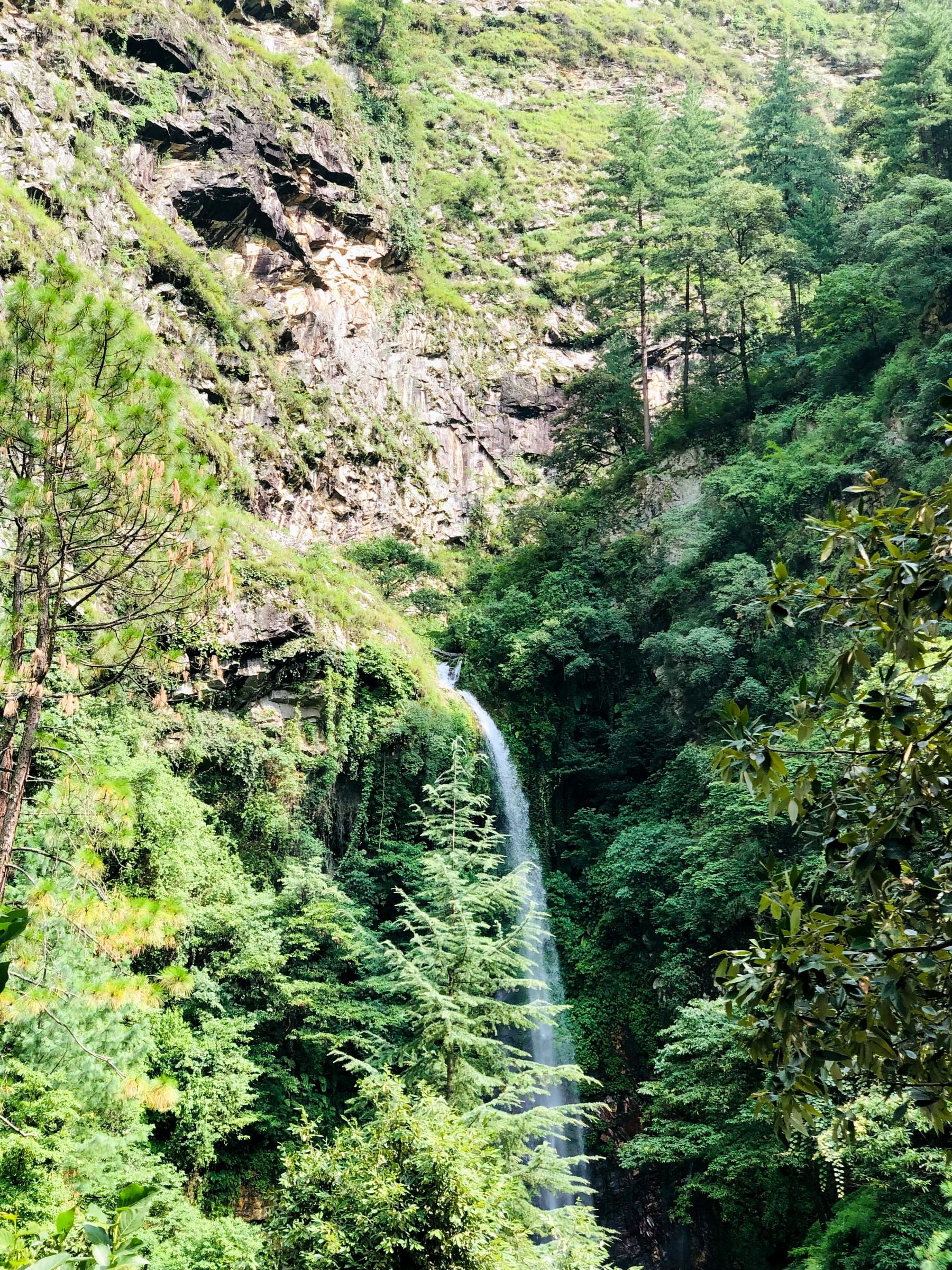
Start with the easy one. The waterfall is about a kilometre from the village, down a path through the trees, where the stream drops into a narrow green gorge with a pool at the bottom. The walk takes 15 to 20 minutes, and early morning is the time to go, before day-trippers arrive and while the light still comes in low through the forest.
Tip
The rocks near the pool stay wet and slippery all year. Wear shoes with grip, not sliders, and keep children back from the edge after rain.
2. Slow down in the Jibhi market cafes
Jibhi’s “market” is a short stretch of road with small shops, a few dhabas and a growing number of cafes, many with decks built out over the stream. This is where the village gathers in the evening.
Order a pot of tea, a plate of momos or siddu (a steamed Himachali bread with a walnut or poppy-seed filling), and stay a while. Many cafes have Wi-Fi, which makes them a good spot for an hour of work if you’re on a longer stay. Prices are modest, and the best seats are the ones closest to the water.
3. Ride to Jalori Pass for the 360° view
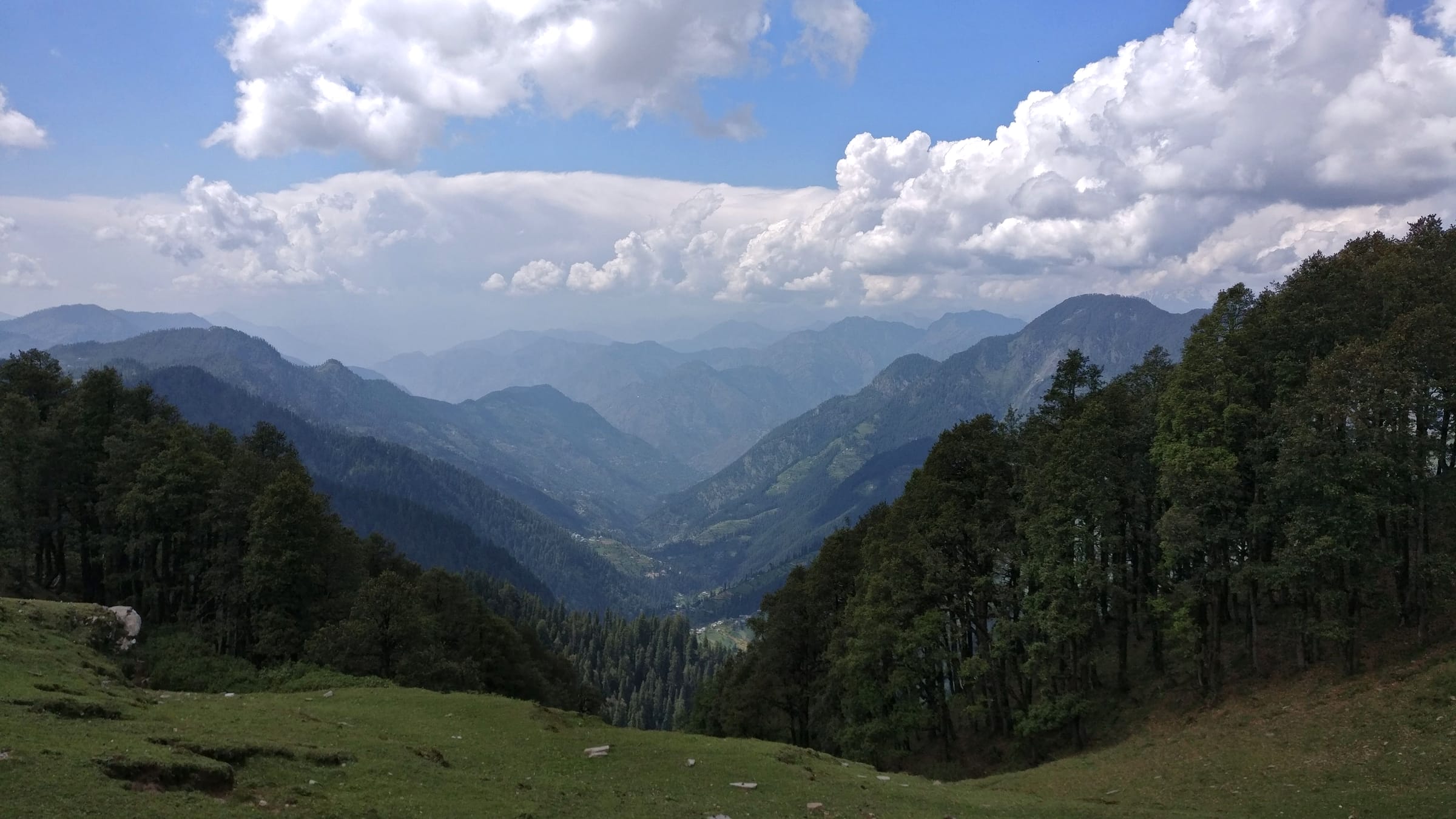
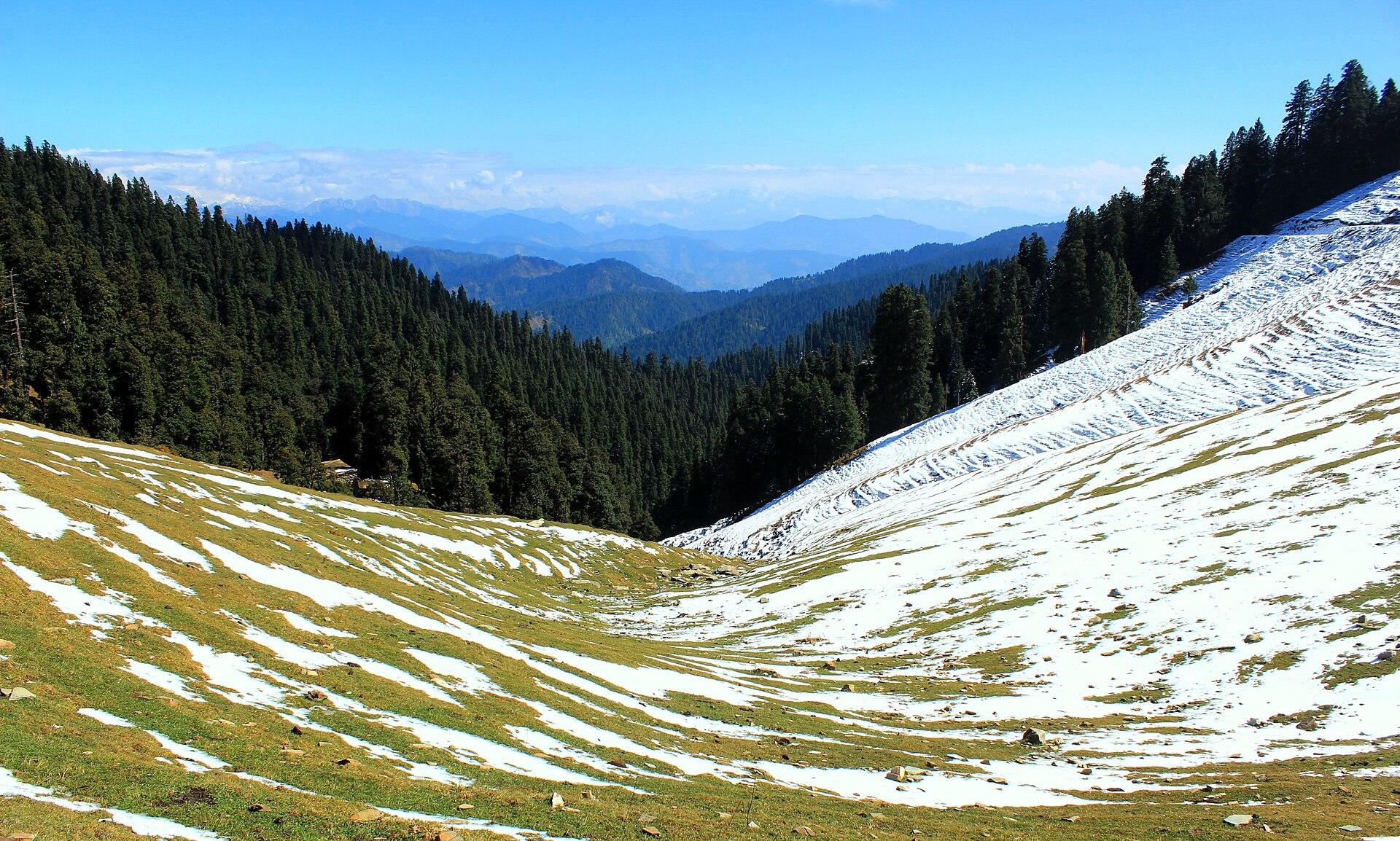
Jalori Pass sits at about 3,120 metres, roughly 12 km above Jibhi. The road climbs through Shoja in a series of tight bends, and at the top you get one of the widest views in the region: ridge after forested ridge in one direction, and on a clear day the snow peaks beyond the Great Himalayan National Park in the other.
The most enjoyable way up is on two wheels. Scooty and motorbike rentals are available in Jibhi; ask at your stay or in the market, and check the brakes and tyres before you set off. If you’d rather not ride a mountain road, take a taxi up and walk from the top.
Heads up
The road to Jalori is steep and narrow, with blind corners. Ride slowly, carry your licence, and wear a helmet. After snowfall the pass can close for days, usually between December and March, so check on the morning you plan to go.
There are a few dhabas at the pass for tea and Maggi, and two of the area’s best walks begin here.
4. Walk to Serolsar Lake
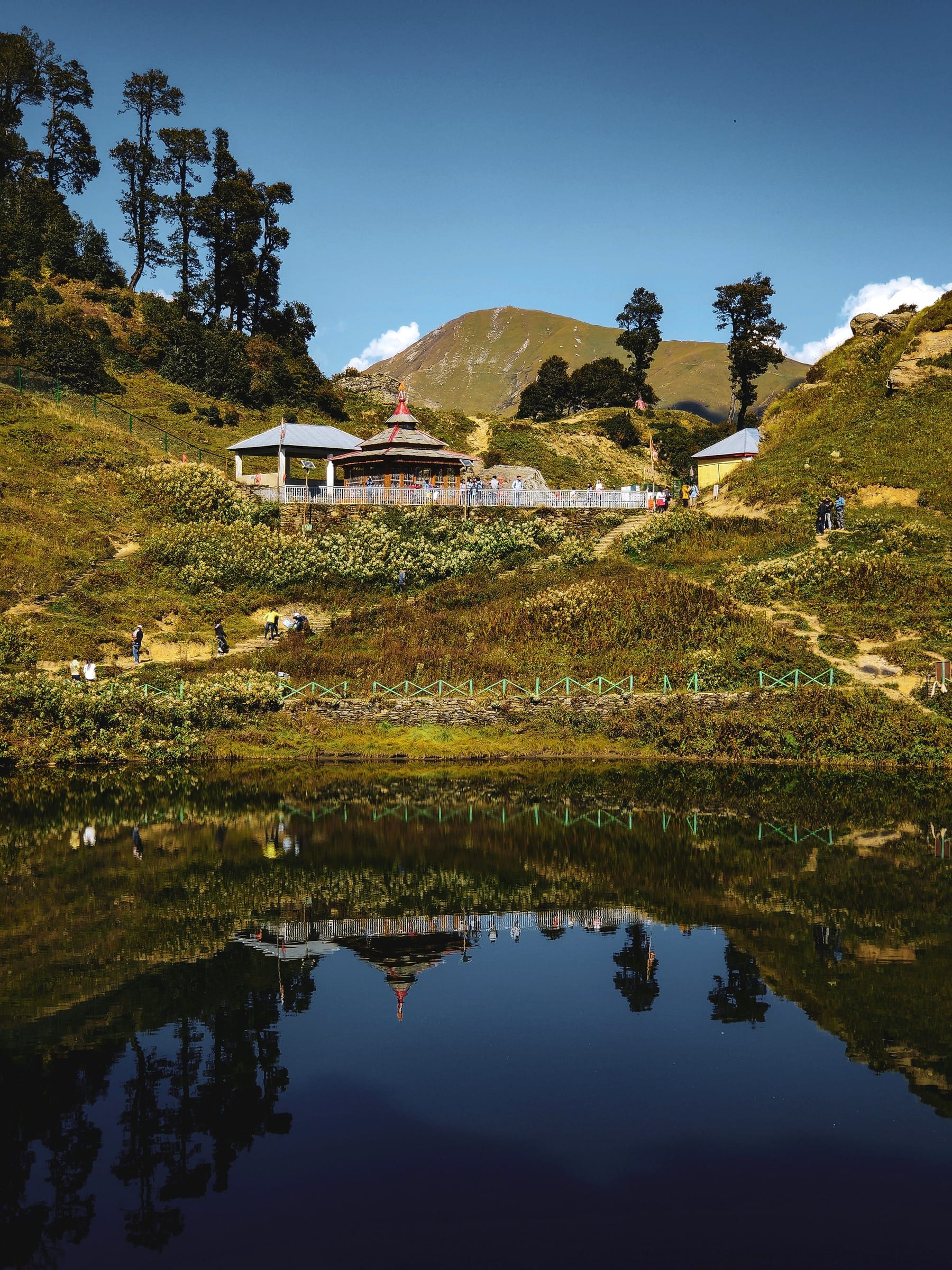
From Jalori Pass, a trail runs along the ridge through oak and deodar forest to Serolsar Lake, about 5 km away. The path is mostly level, which makes it a good first walk at altitude. At the end is a small, still lake with a temple to Budhi Nagin on its bank, and usually a quiet that is hard to find anywhere else in a busy season.
Allow four to five hours there and back, with time to sit by the lake. Carry water and something to eat; there may be a seasonal tea stall on the way, but don’t count on it. If you’d like company and someone who knows the trail and the weather, we arrange a guided walk from Jalori Pass to Serolsar Lake.
5. Climb to Raghupur Fort
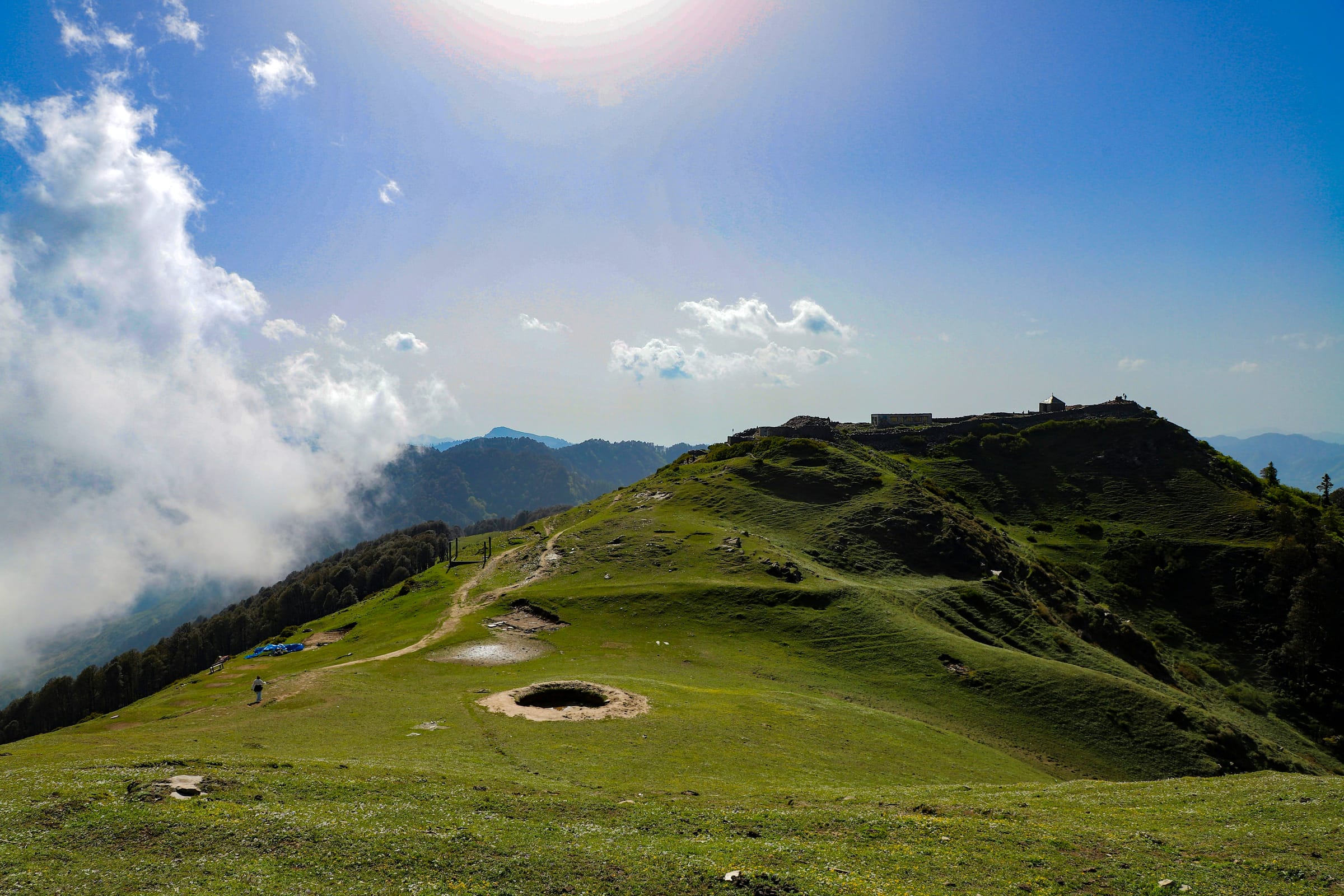
On the other side of the pass, a steeper trail climbs about 3 km to the ruins of Raghupur Fort. Little of the fort itself is left, but the reason to go is the ridge: wide, open meadows with views across several valleys, and clouds that drift through below you on a good day.
Allow about two hours up and a little over one coming down. It is short but steady, so take it slowly if you’ve only just arrived in the hills. The top is windy even in summer, so bring a warm layer. You can also do it with a local guide: see the Raghupur Fort hike.
Good to know
Serolsar Lake and Raghupur Fort both start at Jalori Pass but go in opposite directions. Fit walkers can do both in one long day; most people pick one and enjoy it properly.
6. Stop for lunch in Shoja
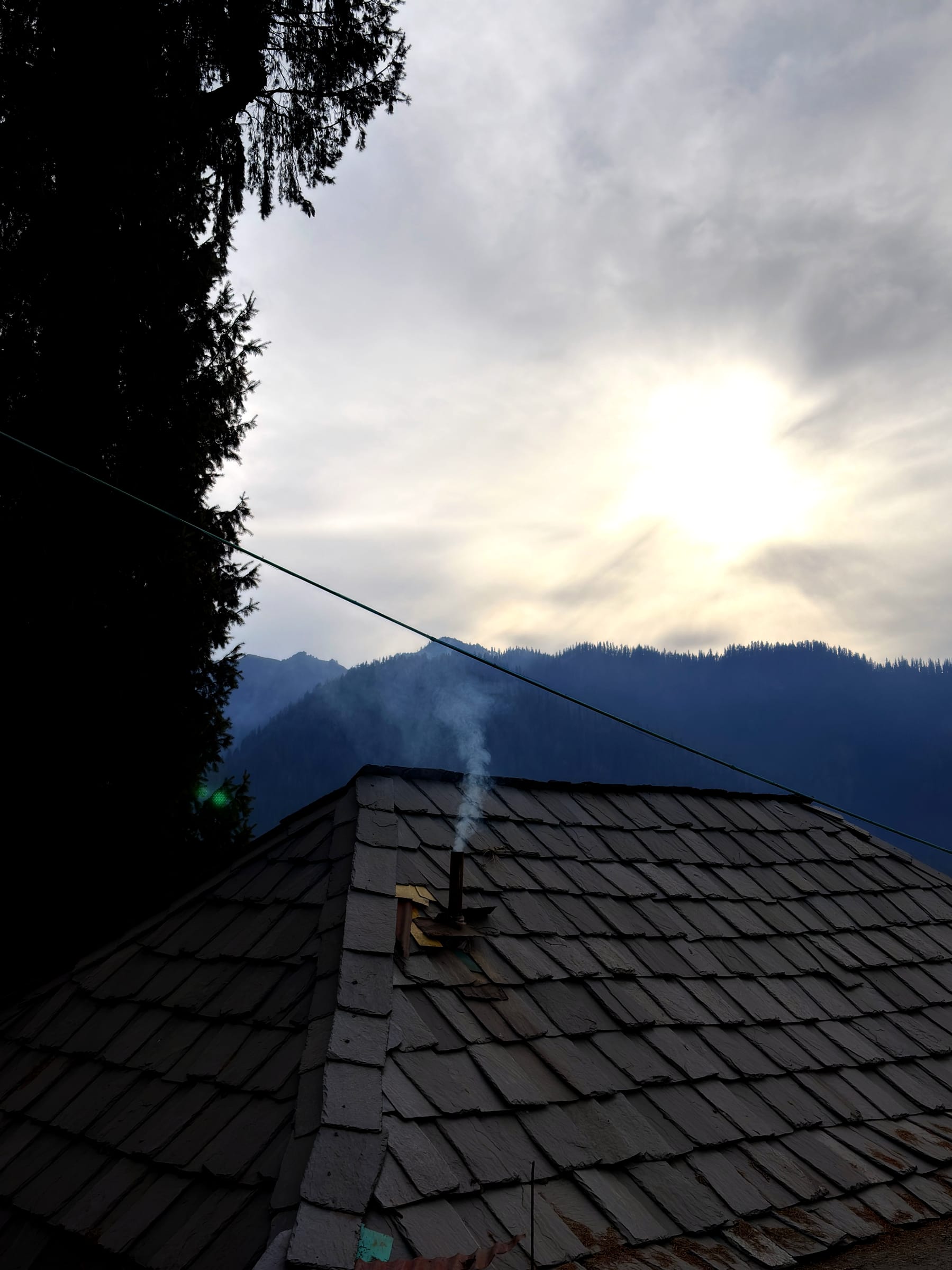
On the way down from Jalori, stop at Shoja, a small village of slate roofs and apple orchards strung along the hillside. It is higher than Jibhi and feels more open, with long views down the valley.
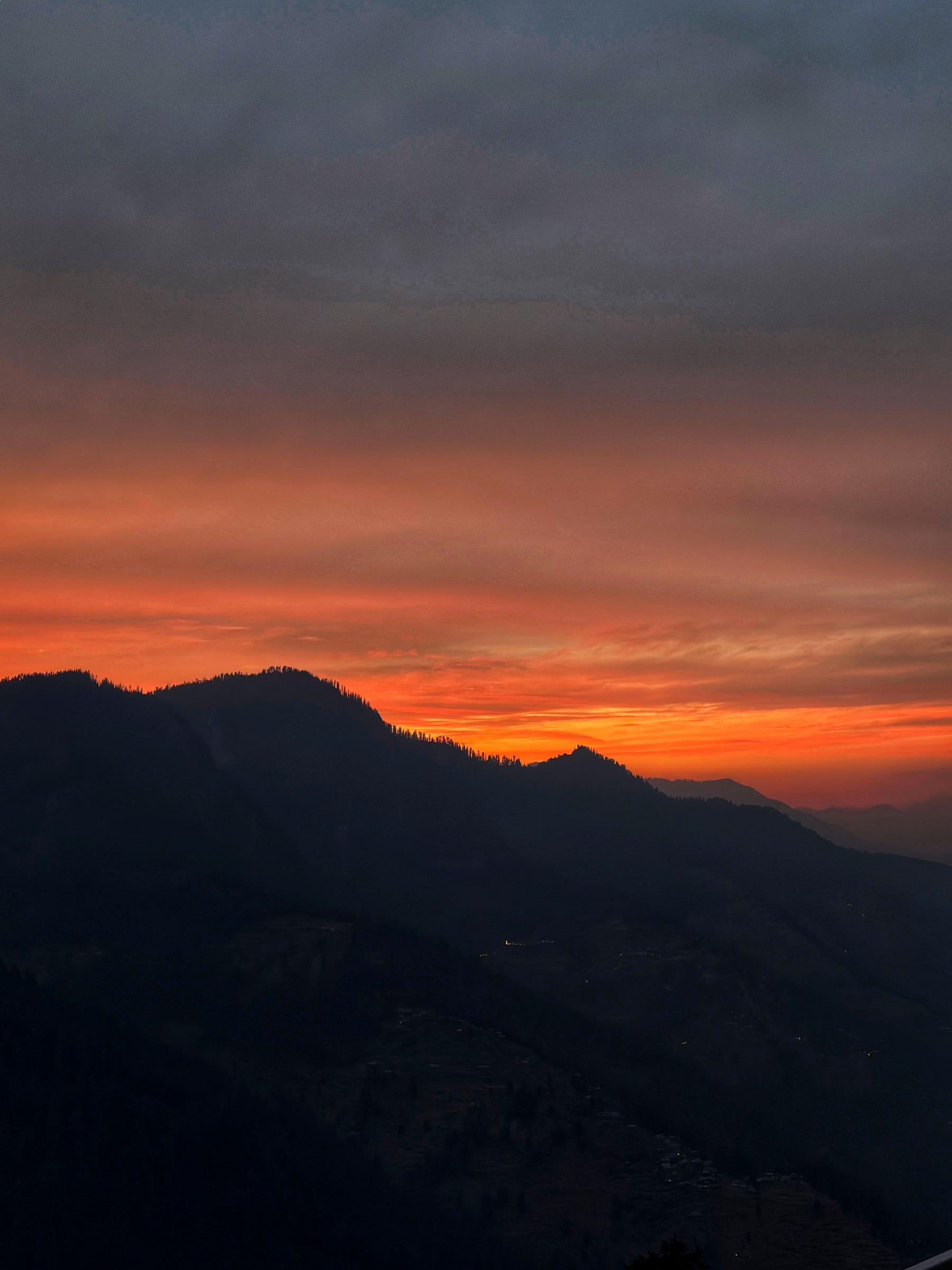
A few homestays and dhabas here serve simple, hot Himachali food: rajma or kadhi with rice, a seasonal sabzi, and fresh rotis. After a morning on the trails, a slow lunch on a terrace in Shoja is the best part of the day for many people. If you can, stay for the sunset; the light over the ridges here is worth waiting for.
7. Hike to Chehni Kothi
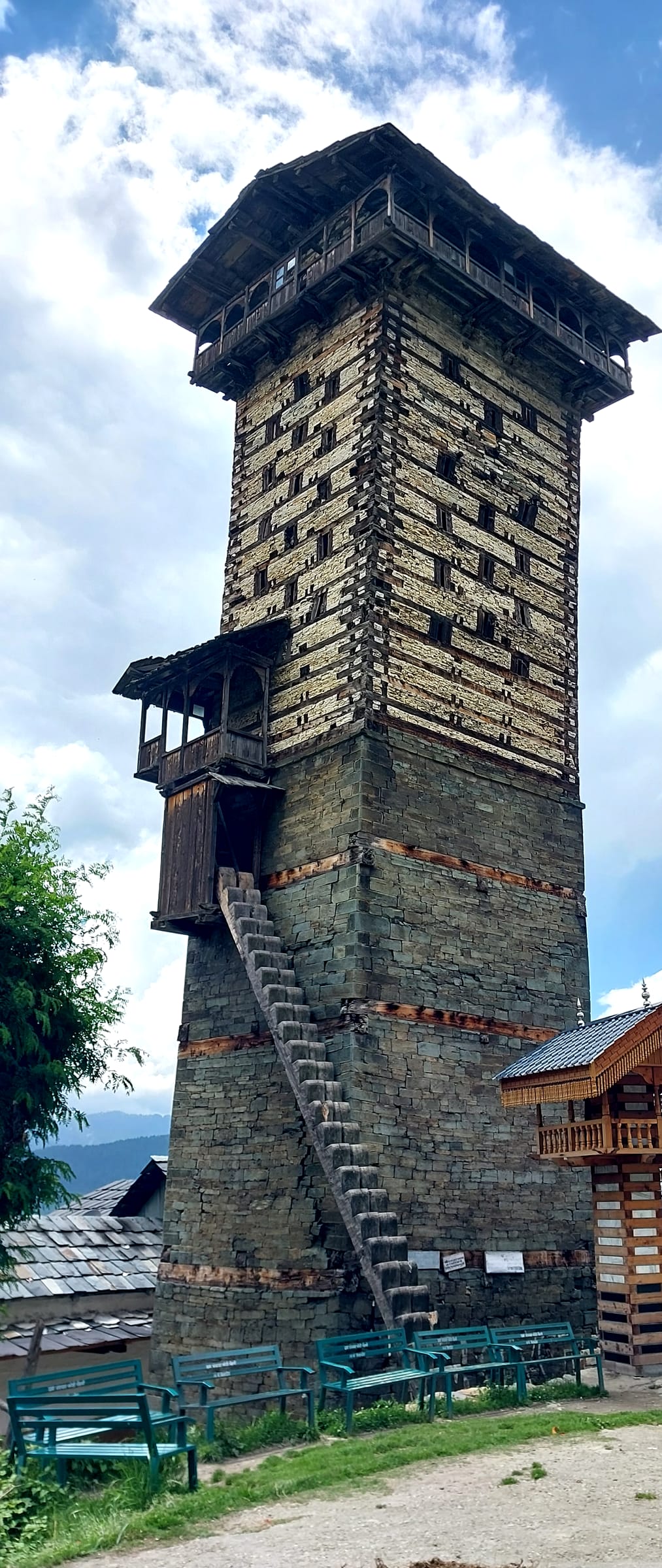
Keep a morning or late afternoon for Chehni Kothi, a tall tower temple about 3 km from Jibhi, reached by a path that climbs through the forest and the village of Chehni. It is built in the kath-kuni style, with alternating layers of timber and stone and no mortar, a method that has held these buildings together through earthquakes for centuries.
The tower is a living temple, so dress modestly, ask before taking photos of people, and remove your shoes where you’re asked to. The walk up takes about an hour, and the views back over the valley make the climb worth it.
Plan your two days
| Day | Morning | Afternoon | Evening |
|---|---|---|---|
| 1 | Jibhi waterfall | Chehni Kothi hike | Cafes in Jibhi market |
| 2 | Ride to Jalori Pass, walk to Serolsar Lake or Raghupur Fort | Lunch in Shoja | Sunset from Shoja, back to Jibhi |
Before you go
- Best time: March to June and October to November for clear days. The monsoon (July to September) is green but wet, and roads can close for a few hours.
- Getting here: see how to reach Jibhi from Delhi by bus, taxi or flight.
- Want somewhere quieter still? The Thachi Valley, a few hours away, is a good extra night.
Our stays in Jibhi each have Wi-Fi, power backup and a desk. Choose your dates and send a request, or message us on WhatsApp to ask about guides for the Jalori trails.